Bee Alley

Image: 
Bee Alley
Description: 

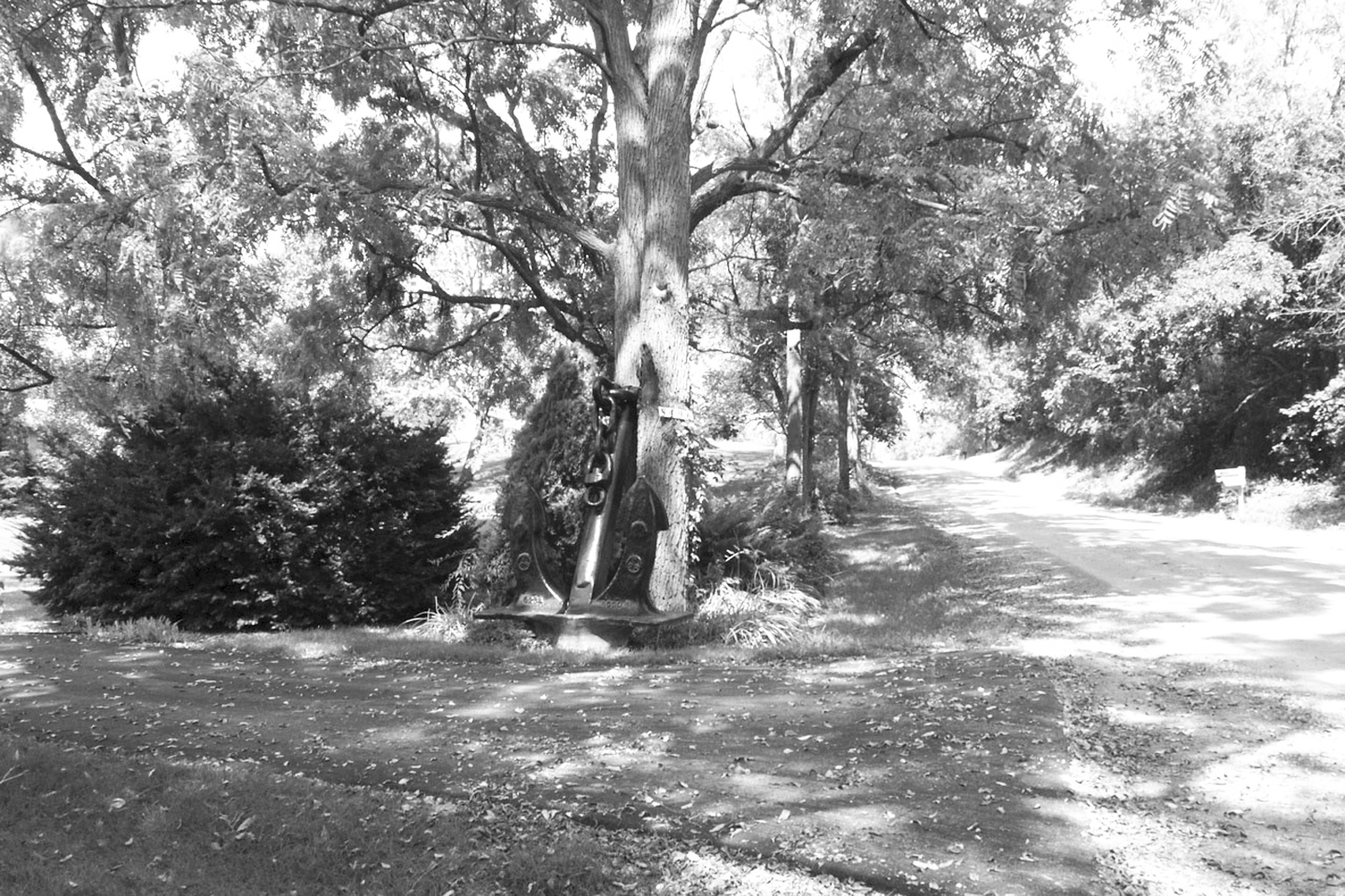
Bee Alley behind the Ypsilanti Food Co-op on River Street

Rights Held By: 
Ypsilanti Historical Society
Related: 

A Taste of Beekeeping History

Published In:
Ypsilanti Gleanings, Winter 2012,
Winter 2012

Author: Roger Sutherland

Did you know that Michigan used to be the center of honey bee queen rearing in this country? That more clover honey was produced in the Thumb than anywhere else? That the Michigan Beekeepers’ Association is the oldest continuous bee association in the country? That much of the early honey bee research was done at Michigan State University? That Michigan, which continually ranks in the top ten honey-producing states, has played a major role in beekeeping history?

Beekeeping is perhaps the oldest form of agriculture in the United States and the world. In the mid to late 1700s, the early pioneers and Native Americans in the Ypsilanti area and Southeastern Michigan began to notice the arrival of a new kind of insect, one that was different from other bees and insects. This new arrival made nests in cavities of trees or buildings. It stored quantities of honey and wintered over in large numbers. Each spring the colonies swarmed and filled the air creating a loud noise. Native Americans referred to these new arrivals as the “Lazy white man’s flies.” Conventional wisdom at that time was that these insects signaled the impending arrival of large numbers of white men and their families.

Scientifically the new arrival would be named Apis mellifera or honey bee to differentiate it from the bumble bee or any other native bee. It is thought that Apis mellifera originated in the Middle East or Northern Africa, the only one of the four known honey bee species to make nests in cavities. The other three species make exposed wax comb nests readily exploited by mammals (including man), birds, and insects.

In areas where there were large mature trees, honey bees made nests in hollow tree cavities. Beekeepers would locate these trees, cut openings into the nest, remove the honey and maintain the nest. To establish legal ownership of the nest, their initials were carved into the tree; this was a common practice up through the late 1700s in the Michigan Territory and throughout the United States.

When maintaining these hives in trees away from home became less desirable, beekeepers would cut the trees down and transport the logs containing hives to their homes. These hives became known as a “log gum hives.” In areas where grains such as wheat and rye were raised, beekeepers would make straw rope and weave it into a basket-shaped hives called skeps.

Honey was useful to mankind in many ways. It was the only sweetening used until granulated sugar and maple syrup became available in the early 1600s. It served not only as a food, but also as a medicine and a preservative. Some beekeepers added water to liquid honey and allowed it to ferment to produce a wine called mead, probably the first wine known to mankind. In the middle ages, honey wine was served as a ceremonial wine at weddings. It was common practice to give the new bride and groom enough mead to last until the next full moon to insure a happy marriage and healthy offspring. The name given to this period was the “honeymoon.” Beeswax, the empty cells in which honey is stored, had a number of important uses: candles, sealant for canned goods, cosmetics and other uses too numerous to address here.

After the arrival and establishment of honey bees in Virginia and Massachusetts, bees began to move westward after swarming each year; it is estimated that they moved about 50 miles a year. The first documented honey bee swarm in Southeast Michigan was reported in 1776. When Michigan homesteaders began clearing the forest for cultivation, bee trees could be maintained on location, split open for removal of the honey and bees, or cut apart and transported to a place where other such nests had been established-an apiary.

In the late 1700s and throughout the 1800s, many scientific experiments were conducted to learn more about honey bee biology. Observations made in 1792 by Francois Huber, who was blind, and his servant determined that queen bees were developed from worker bees, that the queen (not king) ruled the hive, and that the cause of swarming was overcrowding. In 1851, Reverend Lorenzo Langstroth developed the 10 frame movable frame hive which essentially did away with the skep and revolutionized the beekeeping industry. The interior dimensions of the hive were based on the principle of “bee space.” Langstroth realized that bees leave open a space of 5/16”, build extra wax comb in spaces over 3/8” and deposit propolis (a gummy substance from plants) in spaces of ¼” or less. Rev. Langstroth became known as the “Father of Modern Beekeeping.”

For the commercial beekeeper, who has hundreds of hives to move, his hives are trucked to Florida in the fall to pollinate the citrus crop. Then in January, these hives are moved to California for pollination of the almonds, a period of about two weeks, before returning to Florida. As spring approaches, there are pollination contracts to fulfill in Georgia, Tennessee, and other southern states before moving northward along the east coast, finally ending up in the blueberry fields in Maine. This practice is very stressful to the bees themselves and often results in unhealthy bees.

Black bears have become a problem to Michigan beekeepers especially in the northern part of the state. While the bear has a bad reputation for destroying many colonies in Michigan as well as in other states, the bear and honey have had a long positive relationship in marketing honey and this is how it came about: It all started in Canada in 1914 when Harry Colebourn, a veterinarian from Winnipeg, was drafted into the Canadian Expeditionary Force in charge of the Calvary horses being sent to France to fight in World War I. When he arrived in White River, a mother black bear had been killed leaving twin cubs. Harry Colebourn purchased one of the cubs and took it with him on the train headed for Val Cartier, Quebec. When they sailed to England, the cub, now named Winnipeg (or Winnie), became a tamed, welcome pet aboard ship. In England, the bear slept in the soldier’s tent and was taught tricks and loved by all.

Soon Captain Colebourn received orders to be shipped to France. Knowing that Winnie could not accompany him, he made arrangements with the London Zoo to look after the bear until he returned from France. Winnie immediately became a favorite attraction for everyone. She would allow children to ride on her back and would eat from their hands.

Two of the zoo visitors, A.A. Milne and his son Christopher Robin, were especially taken by Winnie. Christopher added the name Pooh to the bear’s name and even had a birthday party at the zoo with friends and Winnie as well. A.A. Milne started to write stories about a lovable honey-loving bear in a book called Winnie-the-Pooh.

Harry Colebourn decided to leave the bear at the zoo when he went back to Canada. Winnie died in May 1934 when she was twenty years old. By now millions of children had read about Winnie-the-Pooh and her adventures with Christopher Robin and the other animals in the story.

Since 1966, my wife and I have been keeping bees in Superior Township. During those 46 years we have witnessed major changes in maintaining viable hives. For the first 20 years our winter colony losses were 10-15%. Colonies were strong early each spring and honey production averaged 100+ pounds per hive. Mated queens could last 3 to 5 years before replacement; now queens last only 1 or 2 months.

Since 1985, there has been one new problem after another affecting our colonies. Winter colony losses now average 30 -50% and colonies that do survive are often very weak in the spring. Honey yields are now in the range of 60-70 pounds per hive and in some years no honey can be removed because 60 to 90 pounds of honey must be left in the hive for the bees to consume over the winter.

The list of causes related to bee health and survival is too long to detail and new threats seem to arise each year without the removal of past problems. Problems since 1985 include: two parasitic mites which have built up immunity to the medications being used for control; the use of new pesticides used in agriculture that affect the health of the honey bee; colony collapse disease; and a fungus disease called Nosema.

Northern states like Michigan often have long cold winters which greatly stress honey bees. After the long and cold winter of 2010-11, colony losses were more than 50% in Southeastern Michigan. While the mild winter of 2011-12 favored winter survival, the early warm Michigan spring caused blossoming in March of apple, peach and pear trees as well as locust and basswood, blossoms that were frozen in April. As a result, there was no supply of nectar for bees when it was needed to produce honey.

Making matters worse has been the drought of this summer which has dramatically reduced nectar secretion in flowers. To make up for the loss of nectar, beekeepers must feed their bees sugar syrup which will make them less likely to consume their winter honey stores. We can only hope that our bees survive the winter of 2012-13.

In spite of all the problems, we still enjoy working with honey bees and continue to learn more about this fascinating insect. One of our greatest joys is sharing honey bee information with others.

[Roger Sutherland, active in the local honey bee program, is a supporter of honey bee restoration efforts.]


Photo Captions:

1. Beekeeping is perhaps the oldest form of agriculture in the United States and the world

2. Beekeepers would locate bee nests in hollow tree cavities, cut openings into the nest and remove the honey

3. In 1851, Reverend Lorenzo Langstroth developed the 10 frame movable frame hive which revolutionized the beekeeping industry

4. Pooh Bear in the “Hunny Pot”

Be True to Your School - Answer Sheet

Published In:
Ypsilanti Gleanings, Winter 2012,
Winter 2012

(for test here)

1. Estabrook in 1949; Joseph Estabrook was the head of the Normal from 1871 to 1880.
2. Roosevelt (on campus) and Lincoln.
3. Head Start – developed and tested in Perry School; participants were tracked over time.
4. George Cavender who succeeded William Rivelli.
5. Prospect became Adams; Harriet became Perry; and Central became Kingston. Adams and Kingston were Ypsilanti educators. Dr. Lawrence Perry was a local dentist and member of the Ypsilanti School Board.
6. Roosevelt athletic teams and the school newspaper.
7. The Seminary.
8. 1959, East and West Junior High schools later to be renamed Middle Schools.
9. They were younger; females could be admitted at 16 while males had to be 18.
10. The Grapefruit.
11. High School principal – Ypsi High (Wiltse) and Roosevelt (Menzi).
12. Ypsilanti High School Drum and Bugle Corps.
13. “Snob Hill” – in the mistaken belief that it was a rich kid’s school. In fact, the school population was carefully managed to reflect the area’s population. Many standardized tests were developed using Roosevelt students. In order for these tests to provide accurate results, the test populations had to be similar to the school populations that would later use these tests.
14. The synchronized swimming team at Roosevelt was one of the first and best in southeastern Michigan.
15. The bust of Teddy Roosevelt displayed in the Roosevelt Library. While “on leave” Teddy attended athletic events and was guest of honor at student parties.
16. Penmanship. The school quickly added a number of other business classes.
17. Michigan State Normal College admitted women since its inception. The first woman was admitted to the University of Michigan in 1866 to study Greek.
18. Mark Jefferson was a geographer who did some of the first geographic studies and maps of South America and served as Chief Cartographer for the U. S. delegation to the Paris Peace Talks following World War I. Jefferson could have secured a post in the most prestigious universities but stayed at the Normal believing that training teachers in geography was crucial to the success of pupils throughout the country.
19. 1970.
20. The first kindergarten in Ypsilanti opened in 1888 at the Normal Training School. The concept of creating learning environments for very young children originated in Germany.

Be True to Your School

Published In:
Ypsilanti Gleanings, Winter 2012,
Winter 2012

Author: Peg Porter

Test your knowledge about Ypsilanti schools, their histories, and why this was known as "the town where education and commerce meet."

1. What was the name of the first school built on the west side?
2. What local schools were used for student teaching in the 1940s through the 1960s?
3. What ground-breaking social/educational program originated in Ypsilanti?
4. Who was the Michigan Band director who got his start in the Ypsilanti Public Schools?
5. Which elementary schools changed names?
6. Who were the Rough Riders?
7. What was the name of the first high school established in Ypsilanti?
8. When were the first junior high schools opened?
9. Other than gender, how did females entering the Normal in its early years differ from the males?
10. What was the name of the April fool's special issue published by Roosevelt High School?
11. What positions did Norris Wiltse and Leonard Menzi hold?
12. Which school marching band wore kilts?
13. How did Ypsi High students refer to Roosevelt High School?
14. Who were the Sinkopaters?
15. What object was regularly "stolen" by Roosevelt High students?
16. Patrick Cleary established a school in Ypsilanti to offer instruction in what skill?
17. Which institution of higher education accepted women first, the University of Michigan or Michigan State Normal College?
18. Who was Mark Jefferson and why is there a building named for him at EMU?
19. What year did St. John's High School close?
20. When and where was the first kindergarten opened in Ypsilanti?

(Answers can be found here)

(Peg Porter is the Assistant Editor of the GLEANINGS and a regular contributor of articles published in the newsletter.)

Answers to Ypsi History - It's a Test

Published In:
Ypsilanti Gleanings, Summer 2012,
Summer 2012

Answers to Ypsi History - It's a Test.

1– D
2– K
3– S
4– L
5– N
6 – R
7 – A
8 – U
9 – O
10 – V
11 – B
12 – J
13 – G
14 – I
15 – P
16 – T
17 – Q
18 – C
19 – H
20 – F
21 – M
22 – E

Other Members of the Team

Image: 
Other Members of the Team
Description: 

Other members of the team: (top row – left to right) Larry Hoffman, David Waters and Fred Thomas. (bottom row – left to right) Alan Moore, and Robert Arrick. Members not pictured are Dewey Barich, Gary Barnes, and Reggie Herndon

Rights Held By: 
Ypsilanti Historical Society
Related: 

Members of the First String

Image: 
Members of the First String
Description: 

Members of the first string: (top row – left to right) Art Dykman, Bob Kidd (Captain) and Ken Ross. (bottom row – left to right) Jim Blodgett, and Lee Judson. Their skills made the difference when the going got tough

Rights Held By: 
Ypsilanti Historical Society
Related: 

Ypsilanti Basketball Program

Image: 
Ypsilanti Basketball Program
Description: 

The Ypsilanti Parks and Recreation Department sponsored a ten week basketball program for junior high school boys

Rights Held By: 
Ypsilanti Historical Society
Related: 

I Might Have Played in the NBA!

Published In:
Ypsilanti Gleanings, Winter 2012,
Winter 2012
Original Images:

Author: Fred Thomas

As a junior high school student I had never heard of the NBA which officially formed August 3, 1949 when the Basketball Association of America (BAA) and the National Basketball League (NBL) merged, creating the National Basketball Association (NBA). Had I known its members would go on to become millionaires, perhaps I‘d have begun improving my hoop skills at a young age. But, at thirteen, what young man was thinking about his future? Life was coming at us head on, and we lived it for the moment!
At any rate, The Ypsilanti Parks and Recreation Department sponsored a ten week basketball program for junior high school boys. Interest in the 1953-1954 leagues drew participants from Ypsilanti High, Roosevelt, and St. John’s schools.
We were the Rough Riders, named after the Roosevelt mascot. The nine other teams in the eighth grade circuit were the Cool Cats, Dragnets, Drifters, Eagles, Greyhounds, Lions, Globe Trotters, St. John’s and Warriors. The monikers chosen obviously favored strong animals, followed by TV programs of the time. There was a popular rhythm and blues singing group at the time called The Drifters. The Globe Trotters were a national basketball exhibition team. Perhaps the names were borrowed from those groups. Cool Cats spoke for itself.
Games were played Saturday afternoons in the Ypsilanti High School gymnasium at 421 North Washington Street. I looked forward to the weekly competitions.We lived on East Cross Street and the mile-and-a-half walk to the games went by quickly.
Our fledgling team was fortunate to have an encouraging coach. Robert Boyd was a student at Michigan State Normal College doing his practice teaching at Roosevelt as a gym teacher. He also played end on the MSNC football team. Thank goodness he volunteered his time with us.
In addition, half our players came with extensive prior experience. I was not one of them and would likely not have participated. However, my best friend, who became the captain, encouraged me to take part. It seemed like a good idea as we went most places together anyway. In retrospect, I would have missed a memorable time had I not participated.
When the nine weekly games were over the Rough Riders (9-0) were in first place. The Dragnets (8-1) swept second place, St. John’s (7-2) captured third, Eagles (6-3) swooped down in fourth, Greyhounds (5-4) raced into fifth, Lions (3-5) roared to sixth, Cool Cats (3-6) danced around seventh, while Globe Trotters (1-8) and Warriors (1-8) were tied for eighth.
In non-league completion we defeated Roosevelt’s top seventh grade team and an eighth grade team from Ann Arbor’s University High. Our only loss was at the hands of a quintet representing Lincoln High (26-24).
Following the presentation of the winners’ trophy and patches, everyone gathered at the home of Ken Ross where we celebrated our victories and took photos.
When the city parks and rec program concluded, so did my organized basketball days. Thus my personal competence never advanced significantly. Other than playing in gym class I didn’t spend much time on the courts. However, I enjoyed seeing other team members play on the high school teams and excel at the sport.
These days I sometimes get depressed when I see big-buck NBA players, and wonder whether or not I might have been one had I stuck with the game!!!!
Of course, I’ll never know the answer. So I console myself that it is still worth a million to dust off the fading snapshots and think about those exciting teenage times.

[Fred Thomas moved to Ypsilanti in 1948, graduated from Roosevelt in 1958, and then from Eastern Michigan University in 1965. He currently lives in Phoenix, Arizona.]


Photo Captions:

1. The Ypsilanti Parks and Recreation Department sponsored a ten week basketball program for junior high school boys

2. Members of the first string: (top row – left to right) Art Dykman, Bob Kidd (Captain) and Ken Ross. (bottom row – left to right) Jim Blodgett, and Lee Judson. Their skills made the difference when the going got tough

3. Other members of the team: (top row – left to right) Larry Hoffman, David Waters and Fred Thomas. (bottom row – left to right) Alan Moore, and Robert Arrick. Members not pictured are Dewey Barich, Gary Barnes, and Reggie Herndon

The “Buzz” about Bees or “Beeing” Aware in Ypsilanti

Published In:
Ypsilanti Gleanings, Winter 2012,
Winter 2012
Original Images:

Author: George Ridenour

Having had the pleasure of talking with Jerry Sutherland and reviewing his article in this issue of the GLEANINGS titled “A Taste of Beekeeping History” I decided that we all should learn more about our local history with bees. I then read and expanded on a July 9, 2012 article that appeared in the Ann Arbor.com written by Janet Miller, freelance reporter titled: “Bee Aware: Ypsilanti Food Co-op supports The Local Honey Project as a way to stem the decline of honeybees.”

Talking with Lisa Bashert, a beekeeper, and manager of The Local Honey Project for the Ypsilanti Food Co-op was an eye- opening experience. Lisa single handedly captured a giant swarm of honeybees (estimated at 20,000) which was moving through and had landed in Depot Town. Of course she endured a few stings in starting the local hives. There are now three locations: The Farm at St. Joe’s, Ypsilanti Food Co-op, and Growing Hope on Michigan Avenue in Ypsilanti. Eventually, with organic management and careful “farming,” it is expected that the Ypsilanti hives will produce stronger and more productive bees and hives.

Honeybees fly from one to seven miles from the hives. They need water and ideally a variety of flowers to pollinate. One of the major issues concerning honey bees is colony collapse disorder (CCD). This is a phenomenon where worker bees from a beehive colony abruptly disappear. This has been noted in Ypsilanti, throughout the United States and worldwide. In 2010-2011, 65% of the hives in Michigan were lost; from 2011 to the present 21% of the hives in Michigan were lost. In Ypsilanti in 2010 80% of the hives were lost; in 2011 40% of the hives were lost, however, in 2012, 20% or less have been lost.

There are several potential causes for these losses: 1) Stress of bees due to drought and weather conditions; 2) Pesticides; 3) Monocrops (i.e. limiting the varieties of crops being produced such as fields of tomatoes instead of corn, tomatoes, cucumbers, etc. - honeybees love a variety of nectars and pollen.); 4) Exposure to other types of bees who try and take over and intermingle with local bees; and 5) Commercial apiaries.

Supermarket “honey”: Many bees are being fed “sugar water.” Much of the honey in supermarkets is from sugar water which is heated, blended and filtered. Natural, organic, raw honey is the best and is used for many purposes such as for a new “therapy” known as apitherapy. Included in this new therapy is the use of honey to inoculate people against pollen allergies and the use of honey to treat wounds since honey is an anti-bacterial that kills germs and promotes healing. Also, bee venom is being used as an anti-inflammatory for arthritis (yes, the patient is stung under the care of a therapist)

Ms. Bashert was behind the City of Ypsilanti adopting an ordinance that allows homeowners to keep up to two hives in their backyards. This was enacted in 2009 by the Ypsilanti City Council after a neighbor of Ms. Bashert complained about her hives.

Finally, the goal of the Local Honey Project is to grow stronger hives, provide locally produced organic honey, help stem the loss of honeybees by producing a resilient native Michigan bee; train an army of new beekeepers and educate the public about the importance of honeybees in the food system. The Local Honey Project will produce queens (most hives have a single queen and about 20% have two queens) and start local hives. For Ypsilanti Food Co-op information, beekeeping information, and Local Honey Project information contact Ms. Lisa Bashert at (734) 483-1520 (Ypsilanti Food Co-op).

Now you know the buzz!

[George Ridenour is a member of the YHS Archives Advisory Board, a volunteer in the Archives and a regular contributor to the GLEANINGS.]


Photo Captions:

1. Bee Alley behind the Ypsilanti Food Co-op on River Street

2. Honeybees fly from one to seven miles from the hives. They need water and ideally a variety of flowers to pollinate

3. Raw, unfiltered honey from Ypsilanti, Michigan

Syndicate content